

What city ALPR systems do:
- Gather objective evidence and facts about vehicles, not people.
- Alert law enforcement to the presence of stolen vehicles.
- Adhere to all State of Missouri privacy laws.

| 
|
The City of Odessa has been and continues to be in full compliance of Governor's Kehoe's Executive Order 26-18 which establishes safeguards on ALPRs.
How do ALPRs work?
Automated License Plate Recognition (ALPR) cameras capture license plate and vehicle characteristics; they are not equipped with facial recognition capabilities.
ALPRs send alerts to law enforcement when they detect a vehicle that has been reported as stolen, associated with a crime or listed in an AMBER, Silver or Missing Endangered Persons Alert. This vehicle information is compared to state and national databases.
Camera Placement
ALPR cameras can be strategically placed to capture detailed data about license plates and vehicles used to commit crimes, enabling quick and efficient action.
By alerting police when a stolen or known suspect vehicle enters a community. ALPRs can help to prevent further crime before it happens and assist in the quicker apprehension of an offender.
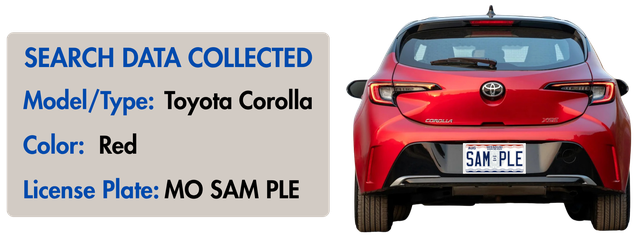
ALPR cameras capture objective, observable data about vehicles including make and model, color, body type and any after-market modifications.
ALPR technology uses data to search for vehicles based on unique vehicle criteria, time and location.
It does not utilize facial recognition or other biometric technology. It is not used for the enforcement of traffic laws (such as speeding) or to enforce parking violations.
The ALPR system is utilized to record license plates, still images and video that are exposed to public view or where there is no reasonable expectation of privacy in accordance with the law. Such examples include:
- license plates and vehicles traveling on public roadways;
- plates and vehicles that are on private property, but visible from a public roadway;
- and license plates and vehicles traveling in a public parking area or business establishment to which the public has access.
Per Odessa Police Department policy, any ALPR technology is only used for official law enforcement purposes.
- Whenever a member of the department accesses the ALPR database, a corresponding case number or computer-aided dispatch (CAD) number must be associated with that access.
- The member's name and/or PIN shall also be included in the access record.
- ALPR system audits are also conducted on a regular basis.
The data captured in the system is stored and secured with end-to-end encryption and is owned by the Odessa Police Department. All data is automatically deleted from the system after 30 days if it is not entered into evidence in connection with a criminal offense.
Flock Transparency Portal
Flock Safety provides every police department that utilizes its cameras with a personalized transparency portal.
- This dashboard provides residents with a look at a variety of statistics, including how many vehicles have been detected and how many searches have been made in the last 30 days.
- The dashboard displayed below for the City of Odessa is hosted and maintained by Flock Safety.
- Pursuant to Executive Order 26-18, Flock certifies that all captured imagery will be permanently deleted within a 30-day timeframe.
Odessa Police Department Policy on License Plate Recognition (LPR/ALPR) Systems per Police Policy